Pages

Showing posts with label Bird. Show all posts

Monday, February 10, 2020

Volunteers find reward in seeing 'rehabbed' mammal or bird returned to the wild - The Union of Grass Valley

Rusty, a red-shouldered hawk, was found starving on the ground and blind in one eye.

Chester, a great horned owl, was rescued after being caught in barbed wire. Skyehawk, a red-tailed hawk, had been shot in Ojai, and Steamer the barn owl only survived because he fell from the nest as a baby into a warm cow patty.

Sir Winston Churchill, a black crow, had been kidnapped by college students who abandoned him in their dorm once summer rolled around. Due to his lack of interaction with other crows, Winston’s convinced he’s a person, say his keepers.

Despite their tragic beginnings, these beautiful creatures have gone on to play an important role as educational ambassadors for the nonprofit Wildlife Rehabilitation & Release (WR&R), which is dedicated to the care and rehabilitation of injured and orphaned wildlife. Each year the group provides care for more than a thousand birds and mammals, and successfully releases over 100 different species of native wildlife — including small mammals, songbirds, raptors and bats — back into the wild.

Only a few birds like Chester, Rusty and Skyehawk — once it’s been determined they cannot survive in the wild — become an integral part of educational outreach programs at schools, service organizations, and community events. But come spring, many more birds and small mammals that have been rescued will not be out in public, but in the care of the dedicated staff and volunteers of WR&R. While the nonprofit is fully permitted and monitored by both the state and federal fish and wildlife agencies, they receive no federal or state funding. With a modest annual budget of $80,000, WR&R depends solely on memberships, donations, grants and fundraisers to survive. But most importantly, they cannot do what they do without volunteers.

Volunteers needed

“We’re closed September through March because there aren’t enough animals to keep the intake center open,” said Karen Koskey, WR&R’s vice president. “But everything changes in the spring. Even now we’re expecting baby owls. People kidnap them, just as they do rabbits, because they think they’ve been abandoned. But they’re not — their mothers come back at night to feed them. June is the most busy because birds start to fledge and fall from the nest. People bring them to us instead of putting them back in the nest. You can’t do that with rabbits and fawns because of the scent, but you can with birds.”

The 2,600-square-foot facility in the Glenbrook Basin is home to a meeting room, songbird room, mammals room (for squirrels, rabbits, chipmunks, baby foxes and the occasional flying squirrel), a triage/exam room for injured animals, a kitchen (the average owl eats five to six mice a day) and a front office. Some older birds and squirrels are kept in people’s homes.

This year, WR&R is in need of as many as 80 volunteers in anticipation of a busy spring. As a result, it will be hosting a series of volunteer recruitment and information sessions on Feb. 22, 23 and 27 at its intake center on Maltman Drive in Grass Valley. The meetings will explain the different roles volunteers can play, such as working at the intake center, participating in educational programs and community events, fundraising, helping to feed the babies, clerical and administrative tasks, transporting wildlife for care to veterinarians or other facilities or “rehabbing” songbirds, raptors, bats and small mammals. Those wishing to work directly with wild animals must be at least 18 and will be required to fill out an application and go through a basic screening process. Most volunteers work one four-hour shift a week, said WR&R president Bev Myers. Trainings are scheduled for March, with exact times to be determined.

“All of our volunteer positions are important — there’s a spot for everyone,” added Myers. “Volunteers can choose their own schedules. It’s very rewarding — we all love what we do.”

“For me, the most rewarding part of WR&R has been working with the birds of prey,” said Koskey. “They come to us when they have been shot or starving, about to die. Then, after we’ve cared for them, we take them back to where they were found and let them go. It’s a wonderful feeling.”

To contact Staff Writer Cory Fisher, email cory@theunion.com or call 530-477-4203.

Let's block ads! (Why?)


"bird" - Google News
February 11, 2020 at 10:02AM
https://ift.tt/37hKc2n

Volunteers find reward in seeing 'rehabbed' mammal or bird returned to the wild - The Union of Grass Valley
"bird" - Google News
https://ift.tt/2s1zYEq
Shoes Man Tutorial
Pos News Update
Meme Update
Korean Entertainment News
Japan News Update

Germany reports outbreak of H5N8 bird flu in backyard poultry: OIE - Reuters

PARIS (Reuters) - Germany has reported an outbreak of the highly pathogenic H5N8 bird flu virus in a backyard in the southwestern part of the country, the World Organisation for Animal Health (OIE) said on Monday.

The virus killed 44 birds out of a flock of 69 in Bretzfeld, in the Baden-Wurttemberg region, the Paris-based OIE said, citing a report from Germany’s food and agriculture ministry.

“All poultry and captive birds have been culled and safely disposed of on Feb. 7, 2020. No poultry, poultry products or captive birds have been dispatched,” it said in the report.

A case of H5N8 bird flu had been confirmed in a wild bird in the eastern German state of Brandenburg in January but no birds on farms were involved, the ministry had then said.

Reporting by Sybille de La Hamaide, editing by Bate Felix

Let's block ads! (Why?)


"bird" - Google News
February 11, 2020 at 01:05AM
https://ift.tt/39mmcfO

Germany reports outbreak of H5N8 bird flu in backyard poultry: OIE - Reuters
"bird" - Google News
https://ift.tt/2s1zYEq
Shoes Man Tutorial
Pos News Update
Meme Update
Korean Entertainment News
Japan News Update

Amidst the coronavirus outbreak, China is now also fighting deadly bird flu in chickens - Business Insider - Business Insider

In the shadow of the Wuhan coronavirus outbreak, a deadly disease has emerged in chickens in a Chinese province near the epicenter of the outbreak.

According to the South China Morning Post, China’s Ministry of Agriculture and Rural Affairs reported an animal outbreak of the often-fatal H5N1 bird flu in thousands of chickens in the Hunan province, which borders the Hubei province to the south.

„The farm has 7,850 chickens, and 4,500 of the chickens have died from the contagion. Local authorities have culled 17,828 poultry after the outbreak,“ a statement by China’s Ministry of Agriculture and Rural Affairs said on February 1.

There are no reported human cases of the H5N1 avian flu, according to SCMP, and transmission of the disease to humans is rare. Nearly all cases of the avian flu infection in people have been associated with „close contact with infected live or dead birds, or H5N1-contaminated environments,“ according to the World Health Organization.

However, the outbreak is a cause for concern because this avian flu has a 60% mortality rate among infected humans. Additionally, the H5N1 bird flu can cause severe respiratory illness, including pneumonia, and neurological changes such as an altered mental state or seizures.

„If the H5N1 virus were to change and become easily transmissible from person to person while retaining its capacity to cause severe disease, the consequences for public health could be very serious,“ the WHO said in a statement.

The Centers for Disease Control and Prevention considers the H5N1 bird flu to have „pandemic potential.“

„Flu viruses are constantly changing and animal flu viruses can change such that they may gain the ability to infect people easily and spread among people, causing a pandemic,“ the CDC’s website explains.

The H5N1 avian flu was first detected in geese in China in 1996. The first human cases were diagnosed in 1997 in Hong Kong. The most recent case was reported in January 2014 from an individual who had recently returned to Canada from China.

„To date, there have not been any reports of HPAI Asian H5N1 virus infections in people in the United States and Asian H5N1 has never been detected in US birds or poultry,“ the CDC website says.

The news of this chicken outbreak came as China grapples with the coronavirus outbreak, which has killed over 900 people in China and infected 40,000 globally. Nearly 100 deaths were reported on Sunday, the highest single-day death toll since the outbreak emerged less than two months ago.

China is racing to build new hospitals and replenish stores of food, test kits, and other critical medical supplies to combat the coronavirus.

Let's block ads! (Why?)


"bird" - Google News
February 11, 2020 at 03:29AM
https://ift.tt/2ScIDON

Amidst the coronavirus outbreak, China is now also fighting deadly bird flu in chickens - Business Insider - Business Insider
"bird" - Google News
https://ift.tt/2s1zYEq
Shoes Man Tutorial
Pos News Update
Meme Update
Korean Entertainment News
Japan News Update

Nature up close: Spring bird migration means many North American songbirds – especially warblers, vireos, thrushes, tanagers, buntings and orioles – passing through High Island, Texas - CBS News

By "Sunday Morning" contributing videographer Judy Lehmberg. 

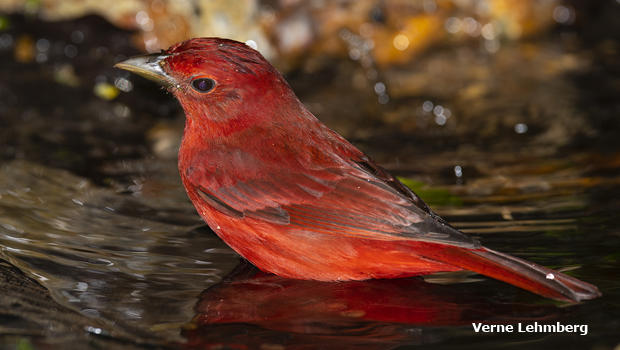
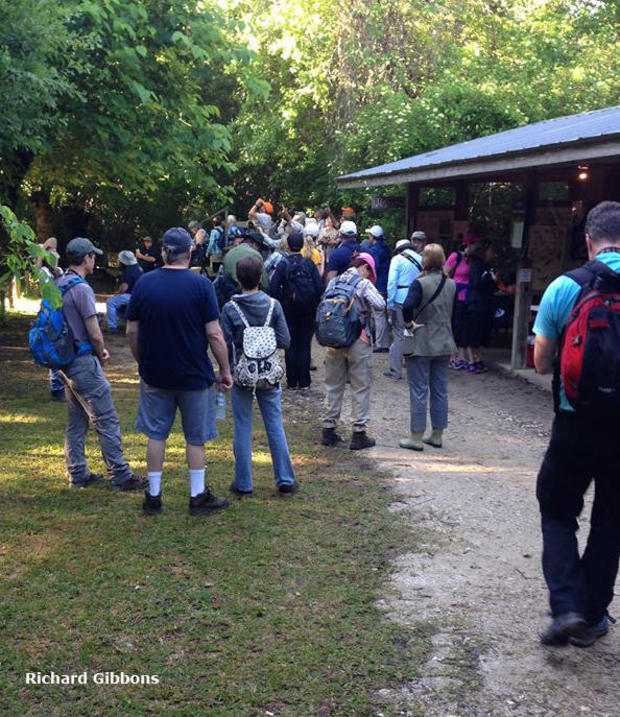
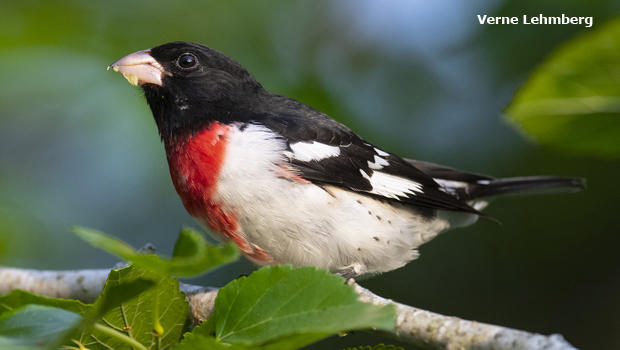
If you see bleachers you normally think sports; you usually don't think of bird watching. You would if you were in the Houston Audubon Society's Boy Scout Woods in High Island, Texas in April. They have bleachers facing a water drip and surrounded on three sides by fruiting mulberry trees. Sit there for a few minutes, and you will hear people quietly calling out birds they've spotted: Summer tanager in the mulberry on the left, right side, lowest branch; male rose-breasted grosbeak in the right mulberry dead center above the V notch; chestnut-sided warbler at the water; Oh look! There's a painted bunting at the drip! That's a lifer for me!

Many North American songbirds – especially warblers, vireos, thrushes, tanagers, buntings and orioles – reproduce in our hemisphere, but winter in Central and South America. They begin their northern migration in March, their numbers peaking in April, with some still migrating in early May.

summer-tanager-verne-lehmberg-620.jpg
Summer tanager.

I've been bird watching during spring migration in High Island, Texas, where both Boy Scout Woods and Smith Oaks are located, since the mid-1970s, well before the Houston Audubon Society purchased both properties. 

boy-scout-woods-richard-gibbons.jpg
Boy Scout Woods, in High Island, Texas. Bird-watching bleachers are in the background.

High Island isn't really an island; it is a small town located between Port Arthur and Galveston only a few hundred yards from the coast. Because it is on a salt dome almost 40 feet high – the highest point between Mobile, Alabama and the Yucatan Peninsula – it supports the growth of trees unlike the surrounding area which is coastal prairies and salt marsh. The trees are a magnet for migrating birds who leave Mexico just after sunset and fly nonstop over 600 miles to the Texas coast. That normally takes about 18 hours. If the wind is strong out of the south, they may continue their journey north, but if it changes to out of the north, particularly after the birds have left Mexico, they stop in the High Island trees to rest, refuel and drink fresh water. That is why this habitat is so essential for their survival.

A north wind is deadly for migrating birds. No one knows the exact number, but many don't make it across the Gulf when the wind is blowing hard out of the north. But it is a different matter for bird watchers: Although they are mindful of the stress it causes the birds, a "fall out" is an amazing spectacle for bird watchers. For as many years as I have been visiting High Island I've never seen the numbers I've heard about when the beach, the school parking lot and every patch of grass is covered with bright blue indigo buntings, red summer tanagers, warblers in every shade of black, blue, yellow and white, as well as many other species. My record so far is 22 species of warblers in one day. Although I felt bad for the birds, it was a spectacle I will never forget.

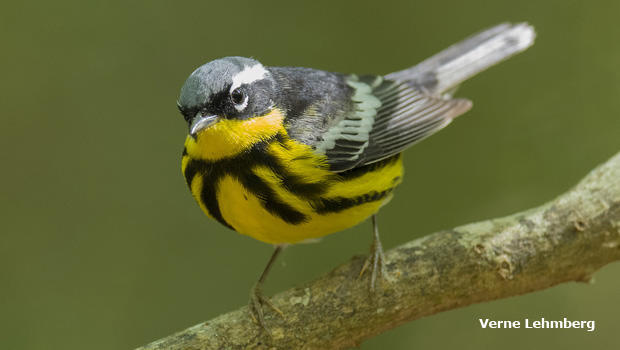
magnolia-warbler-verne-lehmberg-620.jpg
A magnolia warbler.

There is always a predictable order to spring migration. Hummingbirds are some of the first to show up in Texas. Usually the males come first (the scouts, as a friend of mine calls them), then the females. They always seem to know when flowers begin blooming, and that's when they magically appear.

Then comes a long procession of warblers and vireos. White-eyed vireos, northern parulas and prothonotary warblers are usually the first in our part of southeast Texas. When they show up we know the migration is on.

rose-breasted-grosbeak-verne-lehmberg-620.jpg
A rose-breasted grosbeak.

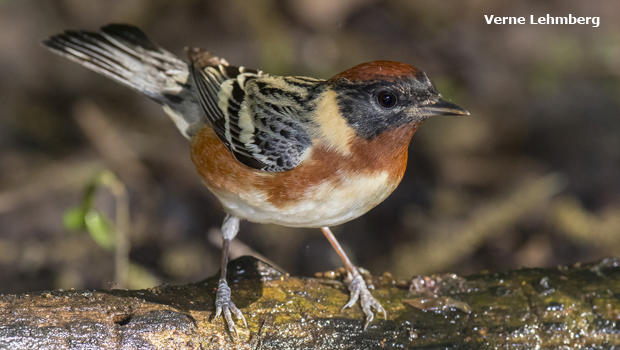
They are quickly followed by worm-eating Louisiana waterthrush (which, despite its name, is a warbler), Kentucky, and hooded warblers. By mid-April chestnut-sided, Blackburnian, blue-winged and golden-winged warblers have become more numerous, and that is usually about the time the mulberries begin to ripen, so the orioles, tanagers and grosbeaks become more common.

Over the years the Houston Audubon Society has added land to both Boy Scout Woods, now 60 acres, and Smith Oaks, which is now 177 acres. Smith Oaks has a great bird rookery, some beautiful large oak trees, photography and observation platforms to view the rookery birds, and this spring a canopy walkway will be available. I can't wait to experience that. They also own five other preserves in High Island as well as Bolivar Flats, a great place to view shorebirds in breeding plumage. If you get a chance to visit you will find some very friendly volunteers at both of the above locations who can direct you to other bird watching spots.

bay-breasted-warbler-verne-lehmberg-620.jpg
A bay-breasted warbler.

For more info:

  • If you would like to learn more about spring migration and/or plan a trip to High Island, the Houston Audubon Society's website is a good place to start. High Island is a small town with very little infrastructure. There is a gas station/convenience store and a campground with RV hookups that fills up fast in April. There are hotels and restaurants in Winnie, twenty miles north.
  • Cornell Lab of Ornithology is another great source of information.
  • A number of years ago it was discovered that migrating birds can be seen on weather radar. Over the last 20-plus years scientists' ability to see migrating birds this way has led to a number of discoveries. Most bird migration happens at night. Cornell Lab of Ornithology along with other researchers and donors have created BirdCast, where each night's radar is summarized in a dynamic map which includes arrows showing the direction in which birds are moving; an estimate of the number of birds per hour in all areas of the U.S.; and the areas with high migration rates. Now they even have a migration forecast that combines weather forecasts with over twenty years of spring migration data – a real boon for serious birders.
  • Another Cornell site, eBird, provides lists of birds seen in a particular area on specific dates and BirdCast actually allows you to plan trips based on when bird migration will be the heaviest.

Judy Lehmberg is a former college biology teacher who now shoots nature videos.

       
See also: 

To watch extended "Sunday Morning" Nature videos click here! 

Let's block ads! (Why?)


"bird" - Google News
February 11, 2020 at 02:13AM
https://ift.tt/31K1kfL

Nature up close: Spring bird migration means many North American songbirds – especially warblers, vireos, thrushes, tanagers, buntings and orioles – passing through High Island, Texas - CBS News
"bird" - Google News
https://ift.tt/2s1zYEq
Shoes Man Tutorial
Pos News Update
Meme Update
Korean Entertainment News
Japan News Update
How to Join the Great Backyard Bird Count - Lifehacker

Photo: Shutterstock

Get ready to count some birds, because Audubon’s Great Backyard Bird Count starts this Friday, February 14, and runs through Monday the 17th. This is a beginner-friendly event, even easier to join than the Christmas bird count.

You don’t even need a backyard. Just find a place where you’re likely to see some birds. This is a great time to visit a local park or wildlife refuge. To participate, count birds for at least 15 minutes “in as many places and on as many days as you like.” You’ll keep a separate checklist for each outing. In addition to noting the types of birds you see, make sure to count (or estimate) how many individuals you saw. Two cardinals at your feeder. 20 geese on the lake.

Advertisement

For your counts to contribute to the worldwide citizen science project, you’ll need an account at the Cornell Lab of Ornithology website, and log your checklists either there or in the eBird app.

The purpose of the project is to gather data on bird populations and how they change over time. (The Great Backyard Bird Count is an annual project.) You can also browse the data yourself, to see what birds your neighbors have noticed near you. Maybe you’ll see them next time you go out!

Let's block ads! (Why?)


"bird" - Google News
February 11, 2020 at 01:00AM
https://ift.tt/3bBg2um

How to Join the Great Backyard Bird Count - Lifehacker
"bird" - Google News
https://ift.tt/2s1zYEq
Shoes Man Tutorial
Pos News Update
Meme Update
Korean Entertainment News
Japan News Update
Santa Barbara Audubon Society Explores Bewildering World of Bird Migration - Noozhawk

By Alexandra Loos for Santa Barbara Audubon Society | February 10, 2020 | 9:00 a.m.

Frank DeMartino

Frank DeMartino

Frank DeMartino, an avid birdwatcher, will discuss the amazing feat of bird migration in his presentation Fly Me To The Moon: Bird Migration Myths & Realities at the Santa Barbara Audubon Society, 7:30 p.m. Feb. 26 in Farrand Auditorium in the Santa Barbara Museum of Natural History, 2559 Puesta del Sol. The event is free to attend; doors open at 7 p.m.

Humanity has been fascinated by the pattern of appearing and disappearing birds for millennia. Understanding migration is a key step to realizing the challenges and threats birds deal with on a regular basis.

DeMartino will explore some of the myths that have surrounded migration through the ages and some that persist. The program will highlight some of the obstacles migrating birds face and the incredible ways they have evolved to deal with them.

Finally, the program will look at current conservation issues that pertain to migration, and current conservation efforts, such as Cornell's Seven Simple Actions to Bring Birds Back.

DeMartino's passion for birds has led him to serve on the board for both Ventura Audubon Society and Conejo Valley Audubon Society (CVAS). He currently serves as president for CVAS and he opened a Wild Birds Unlimited store in Ventura in 2017.

The Santa Barbara Audubon Society, Inc. is a 501(c)(3) nonprofit organization.

Let's block ads! (Why?)


"bird" - Google News
February 11, 2020
https://ift.tt/2vk8cVi

Santa Barbara Audubon Society Explores Bewildering World of Bird Migration - Noozhawk
"bird" - Google News
https://ift.tt/2s1zYEq
Shoes Man Tutorial
Pos News Update
Meme Update
Korean Entertainment News
Japan News Update
What’s up with little birds hogging Pleasanton hummingbird feeders? - The Mercury News

Courtesy of Rich Cordes
A hummingbirds love nectar, whether from plants or backyard feeders, but they aren’t the only birds that have a sweet tooth.

DEAR JOAN: I have been successfully feeding hummingbirds in my backyard for several years. I have three feeders that accommodate one bird each at a time. I feed them the standard sugar-water formula and it has been working well.

However, recently there has been an influx of another type of bird that is hogging the hummingbird feeders, often blocking the hummingbirds from access. I’ve checked my bird identifier books, and it looks like one of the small finch-like birds — grayish back with whitish belly. I understand they should be eating seeds.

I thought to add a seed feeder for those birds, but my husband says the seed feeders are excessively messy, and many weeds will grow as a result. I’m not sure what I should do to provide food for both types of birds, or at least get the hummingbirds back at their feeders. Any ideas?

Beth Leung, Pleasanton

DEAR BETH: I’m not at all sure what the bird is, but the good news is that in time, your problem should resolve itself. The birds might be hogging the hummingbird feeders now because it’s cold and they’re looking to pack on more weight as insulation. As it warms up, they’ll feed more on seeds and insects.

In the meantime, I’d suggest getting hummingbird feeders that can accommodate more than one bird at a time, as well as a selection of seed feeders. Bee guards on the hummer feeders also will prevent the shorter beaked birds from supping.

To minimize the mess and the weeds, buy quality bird seed. There will be less spillage, which helps justify the higher price, and the better seed blends will not contain weed seeds.

However, we are talking seeds here, so you might get some plants sprouting. Install seed catchers — large discs or plates — under the feeders to catch the spillage.

Another complaint about seed feeders is that they can attract rats. You likely already have rats in your yard or neighborhood, but if it’s a concern, you might need to bring the feeders in or empty the seeds out at night.

DEAR JOAN: Coming home from Reno on Martin Luther King Day, we passed several big rigs going west on I-80 that were loaded with hundreds of bee hives. They were covered with a fine netting. You could see some of the bees trapped under the netting that had escaped the hives. The netting was labeled Thomas Honey Farms.

Where are they coming from and why?

Larry Shuyler, San Martin

DEAR LARRY: I’m not sure where they’re coming from but they likely are going to the almond orchards between the Bay Area and Los Angeles.

The bees are part of what is called the “itinerant pollination industry.” To help improve pollination of about 130 commercial crops, bee hive owners rent their hives out to farmers.

Honeybees are single-minded and once focused on a particular crop, such as almonds, they will visit each and every flower on the plant, ignoring other crops that might be in the area, until they are loaded up and moved to a new, different crop.

The hive owners then harvest and process the honey to sell. The bees will stay with their hives, even while bouncing around the country.

Let's block ads! (Why?)


"bird" - Google News
February 10, 2020 at 10:00PM
https://ift.tt/2SLe1mP

What’s up with little birds hogging Pleasanton hummingbird feeders? - The Mercury News
"bird" - Google News
https://ift.tt/2s1zYEq
Shoes Man Tutorial
Pos News Update
Meme Update
Korean Entertainment News
Japan News Update
Volunteers flock to annual Backyard Bird Count - North Country Public Radio

Common Redpoll. Photo: Ian Davies

Birdwatchers across the globe will take part in the 23rd annual Great Backyard Bird Count this weekend. The citizen science project helps biologists at the Cornell Lab of Ornithology create an annual snapshot of the distribution and abundance of birds. Each February, millions of birds are counted, and the GBBC is the largest recorded count of global bird populations.

This weekend’s Great Backyard Bird Count begins on Friday, Valentine’s Day and continues through Monday, February 17. Count the birds for at least five minutes, on one or more days of the count, and then enter the data at www.birdcount.org

Todd Moe spoke with Ian Davies, an avid birder who works at the Cornell Lab of Ornithology.

Todd MoeVolunteers flock to annual Backyard Bird Count

Let's block ads! (Why?)


"bird" - Google News
February 10, 2020 at 08:55PM
https://ift.tt/2ScXrwY

Volunteers flock to annual Backyard Bird Count - North Country Public Radio
"bird" - Google News
https://ift.tt/2s1zYEq
Shoes Man Tutorial
Pos News Update
Meme Update
Korean Entertainment News
Japan News Update
Me & My Car: ’57 T-bird back in family after slipping away before - The Mercury News

David Krumboltz/for Bay Area News Group
Piedmont resident Ted Leyhe says his family has owned this 1957 Ford Thunderbird twice.

Many of us coveted the first-generation Ford Thunderbirds at some time in our lives. It was a sweet two-seat convertible introduced for the 1955 model year. Ford and Chevrolet have been fierce competitors from the earliest days of the auto industry, so when in 1953 Chevrolet exhibited the first Chevrolet Corvette at General Motors’ former Motorama car show, it telegraphed a very competitive challenge to Ford. While that first Corvette was not a very successful model, it was highly successful in making post-war Americans aware of cars that were fun to drive. Ford actually had built a small two-seater for Henry Ford II in 1953 called the Vega, but it never made it to production.

Naturally, Ford wasn’t going to let Chevrolet have this new market segment to themselves, so they came up with the Thunderbird two years later. Ford didn’t copy the European sports car design or style but instead built “a personal car of distinction.” The first public showing was at the Detroit Auto Show in February 1954 as a 1955 model that went on sale the following October. It used Ford’s existing 292-cubic-inch V8 engine with either Ford-o-Matic automatic transmission or manual overdrive transmissions. It was a metal car with a removable fiberglass top as standard and a fabric top as a popular option. Ford planned on selling 10,000 Thunderbirds that first year, but the car was a hot seller and 16,155 customers visited their local Ford dealer for the car of their dreams.

Not many changes were made for the 1956 model, except for more trunk space due to the use of a “Continental Kit” for the spare tire and a “port hole” side window in the fiberglass top. Sales were good, but not quite as good as in 1955. For the 1957 model, there were some noticeable but minor styling changes, and it was the best sales year, selling 21,380 Thunderbirds. This model had a longer deck and tasteful tail fins. The grille was larger, with the front bumper altered. The spare tire was moved back into the trunk. Performance packages were offered and a clever “Dial-o-Matic” four-way power seat that moved the seat backward when the ignition was turned off for easier exit and entry was an option.

Piedmont resident Ted Leyhe says his family has owned this issue’s beautiful black 1957 Ford Thunderbird twice. His father bought it new for $4,485, or about $41,760 in today’s dollars from a Ford dealer in Oshkosh, Wisconsin. It’s a V8 with Ford-o-Matic transmission, but no power steering or brakes. He selected the no-porthole option for the top, which Leyhe has since learned was not a good economic decision. It also has a white soft top,.

“Dad bought it new in 1957, and then in the 1980s he had it restored. In the mid-1980s, my brother called me from Oshkosh to tell me that our dad was selling the T-Bird. I called my dad and asked if I could have the first right of refusal? He said, ‘Do you have $28,000?’ I said ‘no.’ The story goes that a guy came to my dad’s office carrying a briefcase with $28,000 in $100 bills. My dad lit up like a Christmas tree when he saw that.

“So, it got out of the family and I kind of forgot about it, but I have always been fond of that car.”

Leyhe’s father died about 12 years ago.

“At the celebration-of-life service, the man who bought the T-Bird told me, ‘I know where your father’s car is; I know it’s for sale; and I know the guy selling it is desperate to sell it.’ It was the year 2008, when the Great Recession hit, and the current owner was a building contractor. Surprisingly, it turned out that the car made its way out to Antioch.”

Leyhe contacted the contractor by phone.

“I went out to look at the car. It was just shining like a gem, and I drove it. I came home thinking, ‘I am not going to buy that car; I am not going to buy that car.’ But the guy kept calling me back, lowering the price.”

Finally, the asking price was lowered from $39,000 to $34,000, and an agreement was reached.

“But when I bought the car, I was disappointed because it ran like crap,” Leyhe said.

He had heard of T-Bird Headquarters in Concord, experts for all sorts of useful T-Bird information. He learned of a shop called Adams Auto Classics and made an appointment. “I left the T-Bird with them for about a month, and it has run great since then.”

Leyhe has no plans to sell this family treasure a second time. While the odometer reads 49,000 miles, he suspects it’s at least on its second time around.

“ ’Drive it,’ the mechanic told me, ‘because they don’t like to sit.’ ” So he tries to drive it twice a month and almost always gets some “thumbs-up” signs from observers.

Have an interesting vehicle? Contact David Krumboltz at MOBopoly@yahoo.com. To view more photos of this and other issues’ vehicles or to read more of Dave’s columns, visit mercurynews.com/author/david-krumboltz.

Let's block ads! (Why?)


"bird" - Google News
February 10, 2020 at 08:00PM
https://ift.tt/38gIMXd

Me & My Car: ’57 T-bird back in family after slipping away before - The Mercury News
"bird" - Google News
https://ift.tt/2s1zYEq
Shoes Man Tutorial
Pos News Update
Meme Update
Korean Entertainment News
Japan News Update

4 in custody after fatal shooting during robbery at Red Bird apartment, Dallas police say - The Dallas Morning News

Four people — including two juveniles — were in custody Sunday night after a man was fatally shot at a Red Bird apartment earlier in the day.

Damarte Tremayne Burt, 21, Josiah Andrew Salinas, 19, and the two juvenile suspects, whose names were not released because of their ages, each face a capital murder charge in the slaying of David Damato.

Dallas police were called just before 6:30 a.m. to a reported shooting at the Mandalay Palms apartments in the 3100 block of Cliff Creek Crossing Drive, near East Kirnwood Drive.

Damato, 21, had been shot multiple times and was pronounced dead in his second-floor apartment.

A witness told officers that she and Damato were awoken by the sound of glass breaking in their living room, police wrote in an arrest-warrant affidavit.

One of the juveniles confronted Damato — who was armed with a handgun — in the bedroom, and Damato shot him in the torso, according to the affidavit. Salinas then fatally shot Damato with a rifle, police said.

Burt and the second juvenile went into the apartment after the shooting and helped the other two steal cash, jewelry, shoes and Damato’s gun, the affidavit says.

The robbers took the wounded juvenile to a hospital, where authorities detained them, police said.

In an interview, Salinas admitted to targeting the apartment because he knew that Damato kept jewelry and cash there, according to the affidavit. He also admitted that he’d killed Damato, police said.

Burt denied going into the apartment during the incident, but Salinas contradicted that claim, police said.

Burt and Salinas were being held in the Dallas County jail; bail had not been set for either of them late Sunday. One of the juveniles was in juvenile detention, while the other — who had undergone emergency surgery — remained hospitalized in an unknown condition.

The Mandalay Palms apartments have been the site of multiple homicides in recent years, including a 20-year-old man shot in the chest last year and a 53-year-old man slain in 2017. In 2018, a resident wounded one of a pair of robbers who had broken into an apartment.

Damato’s slaying was at least the 20th in Dallas this year.

Let's block ads! (Why?)


"bird" - Google News
February 10, 2020 at 12:55PM
https://ift.tt/2vmIG1K

4 in custody after fatal shooting during robbery at Red Bird apartment, Dallas police say - The Dallas Morning News
"bird" - Google News
https://ift.tt/2s1zYEq
Shoes Man Tutorial
Pos News Update
Meme Update
Korean Entertainment News
Japan News Update

Researchers discover unusually large bird wing in dinosaur-era amber - Xinhua | English.news.cn - Xinhua

Video PlayerClose

BEIJING, Feb. 10 (Xinhua) -- An international team of researchers announced Monday that they have discovered an amber containing parts of an "unusually large" ancient bird wing dating back around 99 million years.

The bird wing found in Hukawng Valley in northern Myanmar, an area rich in amber fossil discoveries, is expected to help enrich the understanding of the size of ancient birds, according to Xing Lida, a paleontologist from the China University of Geosciences.

The amber, 5.3 cm long and weighing 79.4 grams, contains a fragmentary right wing with length measures less than a centimeter. It is thought to belong to enantiornithines, a group of extinct birds commonly found in the Cretaceous Period, Xing said.

Some feathers have also been preserved, with the longest at 37 mm. "It likely belonged to an individual that was about 10 cm long from its snout to vent," said Xing. "It could be a large enantiornithine or a new species of enantiornithines."

The results of the research were published in Cretaceous Research.

Let's block ads! (Why?)


"bird" - Google News
February 10, 2020 at 04:32PM
https://ift.tt/2SevZyQ

Researchers discover unusually large bird wing in dinosaur-era amber - Xinhua | English.news.cn - Xinhua
"bird" - Google News
https://ift.tt/2s1zYEq
Shoes Man Tutorial
Pos News Update
Meme Update
Korean Entertainment News
Japan News Update

Sunday, February 9, 2020

Modi government proposes plan to protect endangered Indian birds - Quartz India

From our Obsession

Climate Consciousness

Every decision counts.

On Feb. 4, images of a rare oriental darter struggling to free its beak from a piece of plastic went viral. The incident was reported from Palwal in Haryana which, according to the news report, has lost more than half of its wetlands in 30 years (1970s-2000) due to land-use change like agricultural expansion. In June 2018, in a similar incident, in a wetland just outside Delhi, a black-necked stork had its beak sealed with a plastic ring around it. Its photo had gone viral. The bird was later rescued after extensive efforts by forest authorities.

Such incidents where birds are impacted by trash and plastic waste could be reduced as part of a new plan to conserve birds and control dumping of waste into areas like wetlands that are bird habitats.

With the focus on tigers and elephants, conservation and protection of birds take a backseat in India. Now, a 10-year plan proposed by the Indian government hopes to help in the conservation of birds and their habitats in India.

The draft—visionary perspective plan (2020-2030) for the conservation of avian diversity, their ecosystems, habitats and landscapes in the country—was put in the public domain by the ministry of environment, forest and climate change on Feb. 3, seeking comments from all stakeholders.

The plan proposes a series of short-, medium-, and long-term plans to protect the rare and endangered species of birds, start species recovery programmes of critically endangered ones, introduce landscape approach to control their declining population, protect birds in urban areas, protect their habitats from turning into wastelands and conserve wetlands and coastal areas that are frequented by birds.

The plan also noted that anthropogenic activities leading to increased levels of greenhouse gas emissions are also impacting the environment on a global scale and thus urged scientific interventions to minimise and mitigate such impacts on avifauna.

Save them from extinction

At least 1,317 bird species have been recorded in India against around 10,000 species found worldwide. Of the 1,317 species recorded in India, 72 are endemic to the country. According to an assessment of the International Union for Conservation of Nature (IUCN) 2018, a total of 100 species of Indian birds are classified as “threatened.” Of these, 17 are categorised as “critically endangered,” 20 as “endangered,” and 63 as “vulnerable.”

Besides these threatened species, there are several other species that are marked by sparse population size and restricted range and are generally considered rare by conservationists. The draft plan observes that it is documented that 270 species (21%) of Indian avifauna fall under the “rare” category and these include the raptors, pheasants, bustards, hornbills, cranes, storks, etc, which together are classified as Rare, Endangered and Threatened (RET) bird species.

Birds perform various ecosystem services like controlling pests in agriculture and forestry, rodent control, pollination of plants, seed dispersal and forest regeneration, scavenging services, indicators of environmental health and have socio-cultural and religious values.

The pressure of anthropogenic activities destroying their natural habitat and factors like environmental degradation, changes in land use like rapid urbanisation and pollution poses a serious threat to their survival. It also leads to ecological imbalances. For instance, the plan noted that the decline in the population of vultures led to an alarming increase in the population of stray dogs especially in urban areas across India. It quoted a study that found that this abrupt increase in the stray dog population resulted in high rates of rabies incidences costing the country about Rs3,400 crore ($472 million) between 1993 and 2006.

The draft plan noted that considering the ecological services that birds perform and their role in the stability of ecosystem functioning, it is imperative that a long-term plan for the conservation of avian biodiversity, their ecosystems and habitats is prepared.

With their 10-year plan, the environment ministry aims to do just that. The draft plan envisages 15 major programmes and various activities that would be implemented over short-term (2020-2024), medium-term (2024-2027), and long-term (2027-2030).

This is an addition to India’s National Wildlife Action Plan (2017- 2031), which, too, has several conservation actions for the protection of birds and their habitats. The MoEFCC had also recently come out with “India’s National Action Plan for Conservation of Migratory Birds and their Habitats along the Central Asian Flyway (2018-2023).”

Count your birds

A total of 554 sites across the country have been designated as “important bird and biodiversity areas.”

There is a network of 870 protected areas (PAs) across India which includes national parks, wildlife sanctuaries, community reserves and conservation reserves and many of them have high avian diversity. A total of 554 sites across the country have been designated as “important bird and biodiversity areas (IBAs)” of which 219 IBAs are outside the protected area network and are under severe anthropogenic pressure. The worrying part is that most of them do not have any conservation action plan or management prescription for their sustenance.

But the IBAs, which are exceptionally rich in avian diversity and other RET species, are vulnerable to pressures from anthropogenic activities resulting in the destruction of their habitats which leads to a decline in their numbers. “Therefore, conservation of such habitats which support a high number of bird species assumes greater significance as strongholds for biodiversity conservation,” said the draft plan.

Of the 554 sites, 506 have globally threatened species and thus it is important that comprehensive management plans for IBAs outside the protected area network are given priority, said the draft plan.

The draft plan recommended “bird surveys” in select landscapes to identify new IBAs for the conservation of birds and other biodiversity. It recommended an assessment of the adequacy of existing protected area network with respect to bird biodiversity and representation of biogeographic zones along with the prioritisation of areas with high avian diversity for developing conservation strategies. It also called for quantifying the economic value of ecosystem goods, services, and functions mediated through the establishment of the IBAs.

Last year, the Indian government came out with similar reports quantifying the economic value of ecosystem services of tiger reserves.

Noted ornithologist Bikram Grewal said proper implementation of such plans is the key. “A focused plan for the protection of birds is a laudable idea as it is probably for the first time that such a plan is proposed. But the real test is always the implementation as there is huge development pressure on the environment ministry. In the hierarchy of conservation actions, birds come well below major species like tigers. Where is the money for protection and conservation of birds and their habitats,” said Grewal.

In the 2020-2021 budget presented by the Indian government, Rs300 crore are allocated for Project Tiger alone.

Better wetlands, safer birds

There are presently 201,503 wetlands (above 2.25 hectare) in India and most of them are under stress due to impacts of urbanisation, agricultural run-offs which require specific management plans for conservation.

While talking about the importance of inland aquatic ecosystems that are important bird habitats, the plan suggested an assessment of the health of the 37 Ramsar Sites in India, ecology of the Myristica swamps of the Western Ghats, conservation plans for select high-altitude wetlands, microplastics in select inland wetlands and their accumulation in the food web, the impact of invasive alien species in wetlands and the ecosystem services provided by the inland aquatic ecosystems.

India is a party to the Ramsar Convention which is an international intergovernmental treaty for the conservation of wetlands.

Wetlands are one of the safe areas for birds but what is happening to wetlands across the country tells the actual tale of the conservation of birds in India.”

“Wetlands are one of the safe areas for birds but what is happening to wetlands across the country tells the actual tale of the conservation of birds in India. For instance, look at the unplanned development that has taken over all wetlands in Delhi and all the National Capital Region. So, many of them have been encroached upon and destroyed,” said birder Savithri Singh.

“Another point is that as far as policies around the conservation of birds is concerned, there is no concerted effort to develop wholesome strategies. There is no continuity in thought processes. Implementation of these policies is a far-off thing,” said Singh.

The draft further recommended identification of coastal and marine areas that serve as suitable habitats for pelagic and coastal bird species followed by an integrated conservation and management plans for promoting sustainable practices.

It also called for assessment and monitoring the impacts of “anthropogenic activities such as discharge of wastes and untreated sewage, disposal of solid wastes including plastics, oil spills and discharge of ballast water, trawling, etc and impacts of invasive and alien species and pathogens on coastal biotic communities with an emphasis on bird populations.”

The draft plan also sought an assessment of the marine debris including macroplastics that affect coastal bird population by choking or accidental foraging.

Map sites critical for migratory birds

Of the 1,317 species recorded in India, about 30% are migratory. Nearly 370 species of migratory birds visit India through three flyways—Central Asian Flyway (CAF), East Asian-Australasian Flyway (EAAF) and Asian-East African Flyway (AEAF). Over 80% of migratory birds (307 species) visit India through CAF and among these, 87 species are of high conservation concern including two critically endangered, five endangered and 13 vulnerable species.

The draft plan suggested mapping and assessment of critical wintering and stop-over sites for migratory birds in India. It recommended species-specific action plans for conservation of select migratory birds, a national database on migratory birds and their habitats, assess threats to migratory birds and their habitats, and develop mitigation measures.

It asked for assessment and monitoring of bird-human conflict zones including agroecosystems, wind farms and airfields to mitigate such conflicts and also the impacts of night lights, air and noise pollution on avifauna. It recommended the development of SOPs and guidelines for the management of airfields to minimise bird hazards to aircrafts and strategies for bird-free airports in the country.

Urban census matters

The draft plan also drew attention towards the dwindling population of birds in urban areas. For instance, several species of birds such as the house sparrow, red-vented bulbul, crow, spotted owlet, etc. have shown a drastic decline in their populations due to increasing urbanisation in India.

It called for consolidating baseline information on birds and their population status in major cities and towns in the country, study the impacts of urbanisation on avian diversity, their habitats and behaviour, monitor bird-human interface in urban environs for emerging issues with respect to health and other conflicts, conduct bird census and studying ecology of scavenging birds in urban agglomerates.

It also recommended the establishment of a state-of-the-art disease surveillance centre for identification and monitoring of diseases in wild birds, surveillance of zoonotic and non-zoonotic diseases in wild birds at select locations in the country and developing standard operating procedures for mitigating disease outbreaks in birds.

The draft plan also sought to develop a “national network of birdwatchers for effective dissemination of information and success stories on bird conservation through citizen science initiatives and electronic media.”

This post first appeared on Mongabay-India. We welcome your comments at ideas.india@qz.com.

Let's block ads! (Why?)


"bird" - Google News
February 10, 2020 at 12:34PM
https://ift.tt/31HC9dK

Modi government proposes plan to protect endangered Indian birds - Quartz India
"bird" - Google News
https://ift.tt/2s1zYEq
Shoes Man Tutorial
Pos News Update
Meme Update
Korean Entertainment News
Japan News Update

To the editor: Helping birds not difficult - Toledo Blade

MENU
  • Facebook Messenger Icon

ACCOUNT

SECTIONS

OTHER

CLASSIFIEDS

CONTACT US / FAQ

Let's block ads! (Why?)


"bird" - Google News
February 10, 2020 at 12:05PM
https://ift.tt/2H7AswL

To the editor: Helping birds not difficult - Toledo Blade
"bird" - Google News
https://ift.tt/2s1zYEq
Shoes Man Tutorial
Pos News Update
Meme Update
Korean Entertainment News
Japan News Update

China reports first H5N6 bird flu in Sichuan poultry farm: Ministry - Reuters

BEIJING (Reuters) - China’s agriculture ministry said the highly pathogenic H5N6 strain of avian flu had been found in a poultry farm in southwestern Sichuan province.

This is the first H5N6 avian flu detected from a poultry farm after four cases found in swans this year.

The ministry said on Sunday night 1,840 birds had died in the farm of 2,497. The rest have been culled.

Reporting by Muyu Xu and Tony Munroe; Editing by Muralikumar Anantharaman

Let's block ads! (Why?)


"bird" - Google News
February 10, 2020 at 08:01AM
https://ift.tt/2H8rhMT

China reports first H5N6 bird flu in Sichuan poultry farm: Ministry - Reuters
"bird" - Google News
https://ift.tt/2s1zYEq
Shoes Man Tutorial
Pos News Update
Meme Update
Korean Entertainment News
Japan News Update

One Person Fatally Shot in Red Bird: Dallas Police - NBC 5 Dallas-Fort Worth

One person was fatally shot early Sunday in Red Bird, police say.

Officers responded about 6:30 a.m. to the shooting call in the 3100 block of Cliff Creek Crossing, near West Wheatland Road.

Police said a person was shot at the location and has died. Their identity has not been released.

No other information was available Sunday morning.

Let's block ads! (Why?)


"bird" - Google News
February 10, 2020 at 06:30AM
https://ift.tt/38fCAyz

One Person Fatally Shot in Red Bird: Dallas Police - NBC 5 Dallas-Fort Worth
"bird" - Google News
https://ift.tt/2s1zYEq
Shoes Man Tutorial
Pos News Update
Meme Update
Korean Entertainment News
Japan News Update

Bird sightings - The Boston Globe

Recent bird sightings as reported to the Mass Audubon Society:

► Boston: There was a razorbill at Fort Point Channel near the Children’s Museum and three on Deer Island. Other sightings included one winter wren at Millennium Park and one fox sparrow at Chestnut Hill Reservoir.

► Greater Boston: There was a lesser scaup at Horn Pond in Woburn and at the Mystic River State Reservation in Medford. A Barrow’s goldeneye was spotted in the Merrimack River behind the Tsongas Arena in Lowell. Five pine warblers were seen along with two Northern shovelers at Four Points by Sheraton in Norwood, a winter wren at McCarthy Park in Medfield, and two fox sparrows at Habitat Education Center and Wildlife Sanctuary in Belmont. There was a Barrow’s goldeneye, a mew gull, and two lesser black-backed gulls at Lake Massapoag in Sharon. At Great Meadows National Wildlife Refuge a Virginia rail, a sora, and a marsh wren continued to be seen.

► South of Boston: A Northern bobwhite was spotted at Leland Farm in East Bridgewater, as well as a white-crowned sparrow at Cumberland Farms in Middleborough and 15 Eastern meadowlarks.

Advertisement


► North Shore: Among sightings were a greater white-fronted goose at Parker River National Wildlife Refuge in Newbury, one eared grebe on West Beach in Beverly, 77 common murres at Andrews Point in Rockport and a Pacific loon. Two thick-billed murres were seen at Jodrey State Fish Pier in Gloucester and four at Lynnway near Nahant Beach. Nearby, there was a mew gull at Lowlands Park. A black-crowned night heron and two American pipits continue to be seen at Niles Pond and Brace Cove in Gloucester and a Townsend’s solitaire continues to be seen at Halibut Point in Rockport. At Bear Creek Sanctuary in Saugus sightings included a grasshopper sparrow, four white-crowned sparrows, and three Eastern meadowlarks.

Advertisement


► South Shore: A pair of barnacle geese continue to be seen on Golfview Road in Acushnet. A tundra swan was spotted at the Somerset Reservoir and Quirk Mello Conservation Area along with a Eurasian wigeon at Fort Phoenix State Reservation in Fairhaven, two American woodcocks on Smith Neck Road in Dartmouth, and five rusty blackbirds at LaPalme farm in Acushnet.

► Central Mass: Sandhill cranes continue to be seen at Dexter Drumlin in Lancaster. A Northern harrier was spotted at the Uxbridge Community Gardens and Soccer Fields as well as a swamp sparrow at Crane Swamp Conservation Area in Northborough. Along the Wachusett Reservoir there were two greater scaups at the Wachusett Dam, two red-breasted mergansers and three common loons at Rainbow Cove, and one common loon at North Dike.

► Western Mass: There were two swamp sparrows at Post Farm Marsh in Lenox, a red crossbill at Steepletop Reserve in New Marlborough, 105 red-winged blackbirds at Ashley Falls in Sheffield. There was a yellow-rumped warbler at Taft Farms in Great Barrington along with an Iceland gull at Barton Cove in Gill, a winter wren at the Bitzer State Hatchery, five evening grosbeaks at a backyard feeder in Colrain, a white-crowned sparrow at Meadowbrook and Handley Road. A Northern pintail was seen at Fannie Stebbins Wildlife Refuge in Longmeadow, and a pine warbler was sighted at a private residence in Granby.

► Nantucket: There were six Northern shovelers, two Northern pintails, and a common gallinule at Pines and Larches. There was a tufted duck and a marsh wren at Madaket. There were 11 kill deer at Bartlett’s Farm joined by two brown thrashers, and a palm warbler. There were two common ravens on Main Street.

Advertisement


For more information about bird sightings or to report bird sightings, call Mass. Audubon at 781-259-8805 or go to www.mass audubon.org.

Let's block ads! (Why?)


"bird" - Google News
February 09, 2020 at 07:05PM
https://ift.tt/2SfGX7r

Bird sightings - The Boston Globe
"bird" - Google News
https://ift.tt/2s1zYEq
Shoes Man Tutorial
Pos News Update
Meme Update
Korean Entertainment News
Japan News Update

Great Backyard Bird Count 2020: A primer, plus what’s been spotted in the Lehigh Valley - lehighvalleylive.com

Valentine’s Day marks the start of the first Great Backyard Bird Count since the release of an eye-opening report on an international “bird emergency.”

Anyone can take part in the global 23nd annual count scheduled Feb. 14-17, 2020. The first step is creating a free online account at gbbc.birdcount.org and familiarizing yourself with instructions on how to participate.

Organizers with Cornell University, Audubon and Birds Canada offer lots of tips on getting started, along with links to an online bird guide and tricky bird IDs so participants can accurately identify the species they’re counting.

Lehigh Valley participants in the 2019 count counted and identified 75 different species in Lehigh County, 83 species in Northampton County and 81 species in Warren County.

“There is no better time to get involved because we are facing a bird emergency,” organizers said in a news release. “In a study published by the journal Science last fall, scientists revealed a decline of more than one in four birds in the United States and Canada since 1970 -- 3 billion birds gone.”

The study notes that birds are indicators of environmental health, signaling that natural systems across the U.S. and Canada are now being so severely impacted by human activities that they no longer support the same robust wildlife populations, according to a news release about the findings.

“Multiple, independent lines of evidence show a massive reduction in the abundance of birds,” Ken Rosenberg, the study’s lead author and a senior scientist at the Cornell Lab of Ornithology and American Bird Conservancy, says in the release. “We expected to see continuing declines of threatened species. But for the first time, the results also showed pervasive losses among common birds across all habitats, including backyard birds.”

Of nearly 3 billion birds lost, 90% belong to 12 bird families, including sparrows, warblers, finches and swallows. These are common, widespread species that play influential roles in food webs and ecosystem functioning, from seed dispersal to pest control, according to the release.

Here is a look at instructions for the 2020 Great Backyard Bird Count, followed by a listing of the species spotted and highest count recorded during the 2019 count in the Lehigh Valley. Click here to view this article on your web browser if the following content is not displaying properly.

Kurt Bresswein may be reached at kbresswein@lehighvalleylive.com. Follow him on Twitter @KurtBresswein and Facebook. Find lehighvalleylive.com on Facebook.

Let's block ads! (Why?)


"bird" - Google News
February 09, 2020 at 07:15PM
https://ift.tt/2S9xqi3

Great Backyard Bird Count 2020: A primer, plus what’s been spotted in the Lehigh Valley - lehighvalleylive.com
"bird" - Google News
https://ift.tt/2s1zYEq
Shoes Man Tutorial
Pos News Update
Meme Update
Korean Entertainment News
Japan News Update

Why windows pose a clear and present danger to birds - The Daily Herald

When you hear a thud against your window, more often than not it’s sad news. A bird has flown headlong into the glass, often with fatal results.

People often wonder: If I can see the glass, why can’t the bird?

“What it comes down to is birds can’t see glass the way humans can,” said Kim Roth Nelson, who has a masters degree in biology with an emphasis in bird-window collision prevention.

When they look at a window they’ll see a reflection of trees, she said. Or they think there’s a passageway they can fly through.

“It’s a big problem, absolutely,” said Jessie Paolello, clinic manager at the Sarvey Wildlife Care Center in Arlington. She estimates that they treat “in the hundreds if not more” every year for injuries such as broken bones and head trauma. “They come in every day.”

Avian conservationist Kim Roth Nelson will be speaking about preventing bird deaths from window collisions at a meeting of the Whidbey Audubon Society. (Sara Roth Abe)

Avian conservationist Kim Roth Nelson will be speaking about preventing bird deaths from window collisions at a meeting of the Whidbey Audubon Society. (Sara Roth Abe)

Most of the injuries are to songbirds, she said. But some raptors, such as Cooper’s hawks and American kestrels, which prey on birds, also are injured by window hits.

These head-on collisions with windows are roughly estimated to kill from 365 million to nearly a billion birds each year in the United States.

When collisions with buildings, cars and other structures are added in, that number is estimated to climb to 1.5 billion birds killed annually in North America, according to a study published last year in the online scientific journal PLOS.

This at a time when North American bird populations have declined by an estimated 3 billion birds since 1970, according to the journal Science.

In Western Washington, hummingbirds, thrushes and sparrows are among the most likely to be injured or killed by bird-window collisions.

Although applying a hawk decal to windows is a common method of trying to prevent collisions, it’s not necessarily effective.

“The bird will try to fly around it and still hit the glass,” Nelson said.

Not surprisingly, large windows present more of an accident hazard than small ones. And the more glass you have in a home, the more potential for collisions you have, she said.

All of the birds in this photo, taken in Canada, died from collisions with windows. Birds can’t see glass the way humans can. (Kenneth Herdy)

All of the birds in this photo, taken in Canada, died from collisions with windows. Birds can’t see glass the way humans can. (Kenneth Herdy)

Bird feeders can make matters worse. Try to post them at least three feet from a window — enough to slow their momentum if they hit the glass — or more than 30 feet away.

Bird feeders can create another problem. Cooper’s hawks find them an all-too-convenient place to stalk birds, chase them into the glass and then eating them, Nelson said.

Paolello said that people who find an injured bird on the ground and it doesn’t move when you approach, gently cover the bird with a pillow case or towel and put it in a shoe box.

“No food, no water and keep it in a warm, dark, quiet place,” she said.

CollidEscape produces several different types of window treatments, including tinted applications and those with patterned lines or dots as signals to birds of a pane of glass. (Courtesy photo)

CollidEscape produces several different types of window treatments, including tinted applications and those with patterned lines or dots as signals to birds of a pane of glass. (Courtesy photo)

Sometimes all birds need is an hour or two to recover and get their bearings. But serious injuries need to be treated at a facility like the Sarvey center.

Sometimes people arrive at Sarvey holding an injured bird in their hands, significantly increasing the stress in an already injured bird.

“Remember when you go to pick up an animal, they think it’s a predator,” Paolello said.

Bird-window collisions are often associated with skyscrapers. But the problem also frequently happens close to home.

“People have no clue how much of an issue it is in a residential house,” Nelson said. ”It’s just as significant in homes because it just adds up.”

Sharon Salyer: 425-339-3486 or salyer@heraldnet.com

What you can do

Here are some steps people can take to try to reduce bird injuries and deaths from collisions with windows:

• Set window blinds down, but open. The inch or so between each slat isn’t enough space for a bird to think it can fly through the space.

• Window treatments can be applied, such as fine nylon monofilament lines, CollidEscape, a window film, or dots and horizontal patterns.

• More information is available at the American Bird Conservancy website at tinyurl.com/birds-glass.

If you go

Avian conservationist Kim Roth Nelson will discuss window treatments used in preventing bird-window collisions during a meeting of the Whidbey Audubon Society at 7:30 p.m. Feb. 13 at the Unitarian Universalist Congregation meeting hall in Freeland, 20103 State Route 525. More at www.whidbeyaudubon.org.

Let's block ads! (Why?)


"bird" - Google News
February 09, 2020 at 04:30PM
https://ift.tt/31CXh57

Why windows pose a clear and present danger to birds - The Daily Herald
"bird" - Google News
https://ift.tt/2s1zYEq
Shoes Man Tutorial
Pos News Update
Meme Update
Korean Entertainment News
Japan News Update